



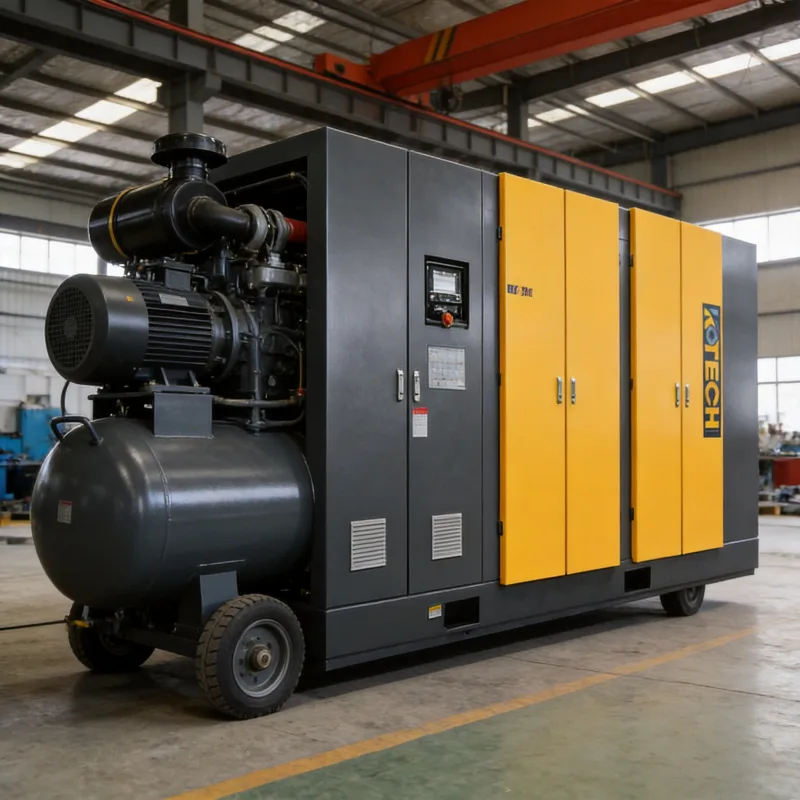
Follow data-driven, scheduled inspections, filter changes, oil services, and component calibrations to maintain a heavy duty diesel air compressor.
Daily Pre-Operation Inspections (5-Minute Checklist)
Start every shift with a quick visual and functional check to catch small issues before they escalate. According to CTA data, 70% of unexpected compressor breakdowns stem from unaddressed minor leaks or loose connections.
Check for External Leaks
Inspect air hoses, fittings, and the air receiver tank for visible air or oil leaks. Use a soapy water solution: bubbles indicate a leak that needs immediate tightening or replacement.
Verify Fluid Levels
Check the diesel fuel tank, engine oil reservoir, and compressor lubricant tank. Top off fluids to manufacturer-recommended levels, avoiding overfilling which can cause pressure buildup.
Test Safety Controls
Engage the emergency stop button and pressure relief valve to confirm they activate correctly. Faulty safety controls account for 12% of compressor-related workplace incidents, per OSHA data.
Scheduled Preventive Maintenance Tasks
Stick to a strict schedule based on operating hours, not just calendar dates. Heavy duty compressors running 8+ hours daily require more frequent service than part-time units.
Air Filter Replacement (Every 500 Hours)
A clogged air filter reduces engine efficiency by up to 20%, per CTA testing. Replace the engine air filter and compressor intake filter every 500 operating hours, or sooner if working in dusty construction or mining environments.
Oil Change & Filter Service (Every 1,000 Hours)
Use only API CJ-4 rated diesel engine oil and compressor-specific lubricant. CTA data shows that using low-quality oil increases wear on piston rings and cylinder walls by 35%, shortening lifespan by 2+ years.
Air Receiver Tank Inspection (Every 1,500 Hours)
Drain condensed moisture from the tank daily, and conduct a full internal inspection every 1,500 hours. Rust buildup in the tank can reduce pressure capacity by 18% and increase the risk of catastrophic failure, per the American Society of Mechanical Engineers (ASME).
Quarterly Component Calibration & Deep Cleaning
Quarterly service ensures precision and prevents premature component failure, which can cost $5,000+ in repairs for heavy duty units.
Diesel Injector Cleaning
Clean diesel injectors every 3 months to maintain fuel atomization efficiency. Dirty injectors reduce fuel economy by 10% and increase exhaust emissions by 15%, per the Environmental Protection Agency (EPA).
Pressure Valve Calibration
Calibrate the pressure relief and regulator valves to match manufacturer specifications. A misaligned valve can cause pressure spikes that damage the compressor pump, leading to $2,000+ in repairs on average.
Cooling System Flush
Flush the engine and compressor cooling systems every 3 months. Overheating is responsible for 25% of compressor breakdowns, and a clean cooling system reduces operating temperatures by 10°F, per CTA data.
Annual Professional Inspection
Schedule a full professional inspection every 12 months, even if the compressor appears to be running smoothly. Certified technicians can detect internal wear and electrical issues that are invisible to visual checks.
According to a 2023 CTA survey, compressors that receive annual professional maintenance have a 30% longer lifespan than those that don’t. Technicians will also test for air quality, ensuring the compressor meets OSHA’s 90 psi minimum pressure standard for industrial applications.
Further Reading