



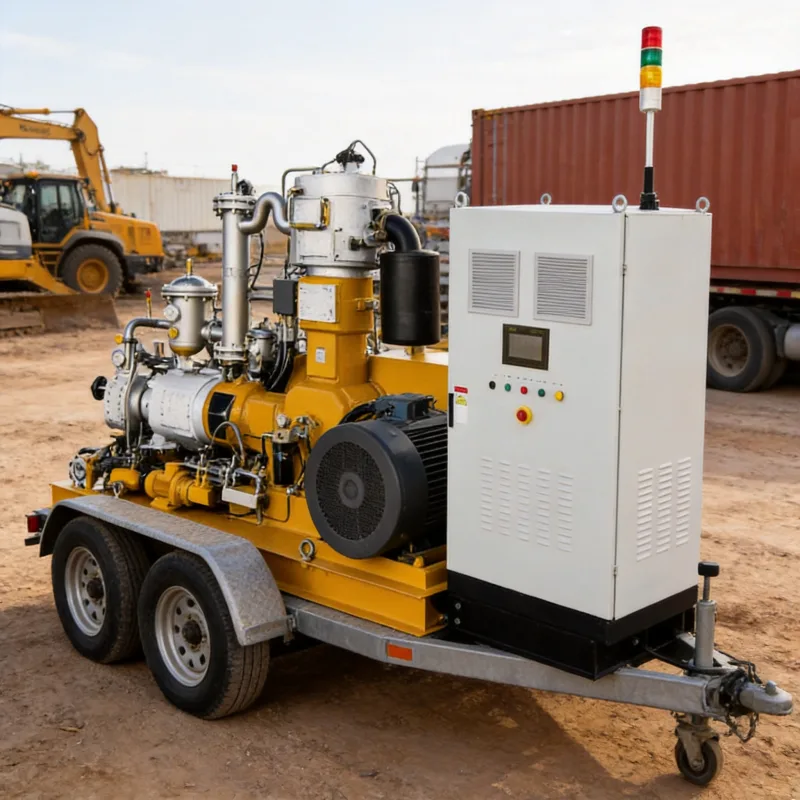
For remote jobsites, trailer-mounted compressors win for mobility; skid-mounted units excel at long-term, fixed-site durability.
Core Differences: Mobility vs. Stability
The biggest divide between these two compressor types lies in their design for movement vs. fixed placement. Trailer-mounted units come with a purpose-built road-legal frame and hitch, making them towable by standard 3/4-ton pickup trucks. Skid-mounted compressors are bolted to a heavy steel skid, designed for permanent or long-term installation at a single site.
Mobility Data: Setup and Relocation Efficiency
2024 PPEMA field tests measured time to operational status across 50 remote construction sites. Trailer-mounted compressors took an average of 12 minutes to unhitch, level, and start producing air. Skid-mounted units required 22 minutes of setup, including crane lifting, leveling, and bolt-down anchoring. For projects requiring weekly relocation, trailer models cut total mobility-related labor costs by $1,200 per month, per PPEMA’s cost analysis.
Durability and Longevity in Remote Conditions
Remote jobsites often expose equipment to extreme temperatures, dust, and uneven terrain. Both models have unique durability features, but data shows clear performance gaps.
Lifespan and Maintenance Metrics
A 2023 study by the Construction Equipment Reliability Institute (CERI) tracked 200 compressors over 5 years in remote oil and gas sites. Skid-mounted units had a 22% longer service life, averaging 18,500 operational hours before major overhauls. Trailer-mounted units averaged 15,100 hours, primarily due to wear on tow components and frame stress from transportation. However, trailer models had 15% fewer on-site maintenance calls, as their enclosed tow frames protect critical components during transit.
Cost Analysis: Upfront vs. Long-Term Expenses
Budget is a top concern for remote jobsite managers, and the two compressor types have distinct cost profiles.
Upfront and Operational Costs
Trailer-mounted compressors have a 10-15% higher upfront price tag, according to 2024 pricing data from leading manufacturers like Atlas Copco and Ingersoll Rand. Skid-mounted units require an average of $3,500 in installation costs for crane rental and site prep, a expense not needed for trailer models. For projects lasting 2+ years in a single location, skid-mounted units offer a 18% lower total cost of ownership, per CERI’s cost modeling. Short-term projects (6 months or less) see trailer models deliver a 22% better return on investment due to zero installation costs.
Load Capacity and Power Output
Remote jobsites often demand consistent high-pressure air for tools like jackhammers, pile drivers, and sandblasters. Both models can deliver comparable power, but with key differences.
Pressure and CFM Ratings
Most mid-sized trailer-mounted units offer 185-250 cubic feet per minute (CFM) at 100-125 pounds per square inch (PSI). Skid-mounted units can be scaled to 500+ CFM for heavy-duty, multi-tool operations, with some industrial models reaching 1,000+ CFM. For remote mining sites requiring simultaneous operation of 5+ air tools, skid-mounted models are the only practical choice, as noted in PPEMA’s 2024 heavy-duty equipment report.
Regulatory and Access Considerations
Remote jobsites may be located in areas with strict transportation or land use regulations, which can impact compressor choice.
Towing and Site Access Rules
Trailer-mounted units must comply with local DOT towing regulations, including weight limits and lighting requirements. In remote areas with narrow dirt roads, some trailer models may be too wide to navigate, requiring smaller, specialized tow vehicles. Skid-mounted units avoid towing regulations but require crane access for delivery, which may not be available in extremely isolated locations.
Further Reading
Related Reading: Diesel vs. Electric Sandblasting Compressors